
Tiantai Gouzhou Guo: A Taste of Childhood
Like folk songs that express feelings amidst mountains and rivers, like threads of nostalgia that linger in the hearts of wanderers, like village chronicles that tell stories of the past… the cuisine of Mount Tiantai not only carries thought-provoking traditional culture but also vividly interprets the lifestyle that the people of Tiantai hold dear. Gazing at the mountains, admiring the flowers, savoring the delicacies—roaming Mount Tiantai, the poetry and distant horizons one longs for are no longer far away.
Three Generations Bound by Gouzhou Guo
On the shopping street of the Tourist Service Center in Chicheng Subdistrict, Tiantai County, there is a Hehe vegetarian restaurant with a simple yet elegant decor.
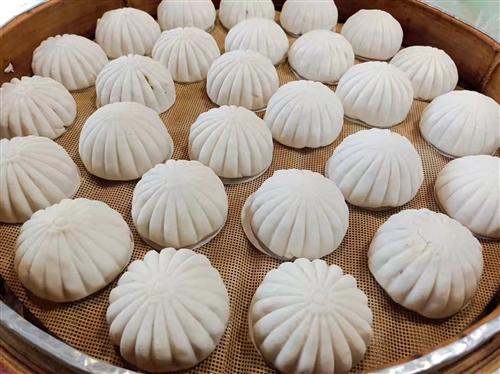
The proprietress, Hua Ninghe, busies herself in a corner of the kitchen, making Gouzhou Guo. After a while, trays of uniquely shaped Gouzhou Guo come out of the steamer. They are jade-white, with distinctive forms, emitting a faint, fragrant aroma of rice flour.
"Gouzhou Guo is a traditional local snack in Tiantai, passed down for many years. This craft is mostly handed down from mother to daughter. In my family, my grandmother taught my mother, and my mother taught me. Later, I plan to pass it on to my daughter as well, so it continues from generation to generation," says Hua Ninghe.
Hua Ninghe, 43, is a native of Tiantai. Her grandmother, Xu Baimei, was a chef for a wealthy family in her early years, renowned for her superb culinary skills. Whenever a relative's child celebrated their first birthday, the warm-hearted Xu would take the initiative to visit and help them make Gouzhou Guo. Hua's mother, Fan Lyurong, born in 1951, is also skilled at making Gouzhou Guo. Hua Ninghe, who learned the true essence of the craft from her grandmother and mother, mastered the art while still in middle school—she was 16 at the time.
In July 2019, Hua Ninghe's restaurant opened. In addition to vegetarian dishes, the menu features the famous local snack, Gouzhou Guo. In recent years, while staying true to Tiantai's traditional culinary techniques, she has continuously innovated through experimentation. For example, she has tested various materials for the special molds used to shape the Gouzhou Guo.
Gouzhou Guo Originates from the "Zhuazhou Rite" (First Birthday Catch)
Gouzhou Guo has its roots in the Zhuazhou ritual. Similar to other customs such as announcing a child's birth, the three-day bathing ceremony, the one-month celebration, and the hundred-day blessing, the primary purpose is to give thanks for life and wish for its flourishing. These rituals embody parents' abundant love for their children and are akin to parent-child games.
"Gouzhou" is a Tiantai dialect term meaning a baby's first birthday (completing one full year). On this day, wealthier families may hold a banquet to receive blessings from relatives and friends. Ordinary families also cook "Gouzhou noodles" or make "Gouzhou mantou" (steamed buns) or "Gouzhou zongzi" (rice dumplings), and send them along with pork to the child's maternal family. Upon receiving these, the maternal family makes Gouzhou Guo, a "Gouzhou garment," and boots and caps as return gifts. The paternal family then shares the Gouzhou Guo, along with dried beans and other items, with relatives, friends, and neighbors. Naturally, those who receive gifts reciprocate with items such as yarn, clothing, eggs, or silver ornaments. On this day, children often wear silver ornaments, which are believed to bring good luck and ward off evil.
Exquisite Craftsmanship
In towns such as Baihe, Shiliang, and Nanping in Tiantai County, the custom of making Gouzhou Guo has been preserved. As a famous snack, Gouzhou Guo has become a golden calling card for Tiantai's tourism and catering industries. Last June, the craft of making Gouzhou Guo was inscribed on the list of representative intangible cultural heritage projects of Taizhou City.
Gouzhou Guo is also known in Tiantai as "Gouzhou Round" or "Snow Balls." They are as white as snow, with a soft, fragrant, slightly chewy outer layer. The fillings are generally divided into savory and sweet. Most locals prefer savory fillings, which typically consist of tofu, bamboo shoots, fried tofu puffs, dried tofu, and pork as the main ingredients. These are stir-fried until cooked and wrapped in the thin skin. After steaming, Gouzhou Guo exudes the fragrance of pork, the tenderness of tofu, and the freshness of vegetables. One bite releases the savory juices of these fillings as they burst out of the "shell."
Hua Ninghe explains the process: First, mix water-milled glutinous rice flour and non-glutinous rice flour in a certain ratio, add boiling water, and knead repeatedly until a smooth dough forms; set aside. Next, heat oil in a pan. When the oil reaches about 70% heat, add carrots, dried tofu, lettuce, water chestnuts, shiitake mushrooms, pork, and peanuts, along with appropriate amounts of salt, oyster sauce, soy sauce, and chicken essence. Stir-fry until cooked, then remove from heat. Alternatively, for a sweet filling, stir-fry osmanthus flowers, red bean paste, peanuts, sugar, and sesame seeds in lard, then mix well. Then, take a small piece of dough, evenly knead and shape it into a thin, bowl-like wrapper, add the filling, and use the space between your thumb and index finger to rotate and gradually seal the opening, pressing tightly and rolling into a ball. Press into a special carved mold to shape, then unmold. Place a piece of oil paper or a bamboo leaf underneath to prevent sticking. Thus, one raw Gouzhou Guo is completed. Hua Ninghe's Gouzhou Guo are uniform in size, "each weighing about 150 grams."
The final step: after bringing water to a boil, place the Gouzhou Guo in a steamer and steam for about 15 minutes until fully cooked inside and out, then remove and let cool. While still hot, use a chopstick to dot the center with "yang hong" (red yeast rice powder), symbolizing good fortune.
Gouzhou Guo is not only a gift given to celebrate a child's first birthday but has also, over time, become an auspicious food in people's daily lives.
Translator:Jiayang Lin