
Michelin-Level Ingredients Achieved Through "Freshness" | Decoding "Taizhou Cuisine"
On April 9, 2026, the 2026 Michelin Guide Shanghai-Jiangsu-Zhejiang Restaurant Selection awards ceremony will be held in Taizhou. This city nestled between mountains and sea, blessed with natural endowments and years of industrial craftsmanship, is using the word "fresh" as its core to map out a high-quality ingredient landscape from farm to table. As the event approaches, we launch this series of reports, "Decoding the Development Code of Taizhou Cuisine's Entire Industrial Chain," exploring the forces behind the rise of Taizhou cuisine. Stay tuned!
"Fan in hand, I dine by the tavern, holding a crab claw." "Perch fat and water shield fragrant make a fine soup; fresh buckwheat and new oil give a fragrant pancake." "I know how to prepare fine eel; naturally, it tastes sweet. No need for vinegar, soy sauce, or pepper and salt — each bite is more fragrant than the last." Reading these poems about food — have they already awakened your taste buds?
To create a Michelin-level dish, high-quality ingredients, top-grade cookware, and skilled chefs are all indispensable. Recently, our reporter visited several ingredient production enterprises and discovered that Taizhou, with "freshness" as its core, has drawn a map of high-quality ingredients from farm to table.
Quality Vegetables: "Freshness" with "Accelerated Speed"
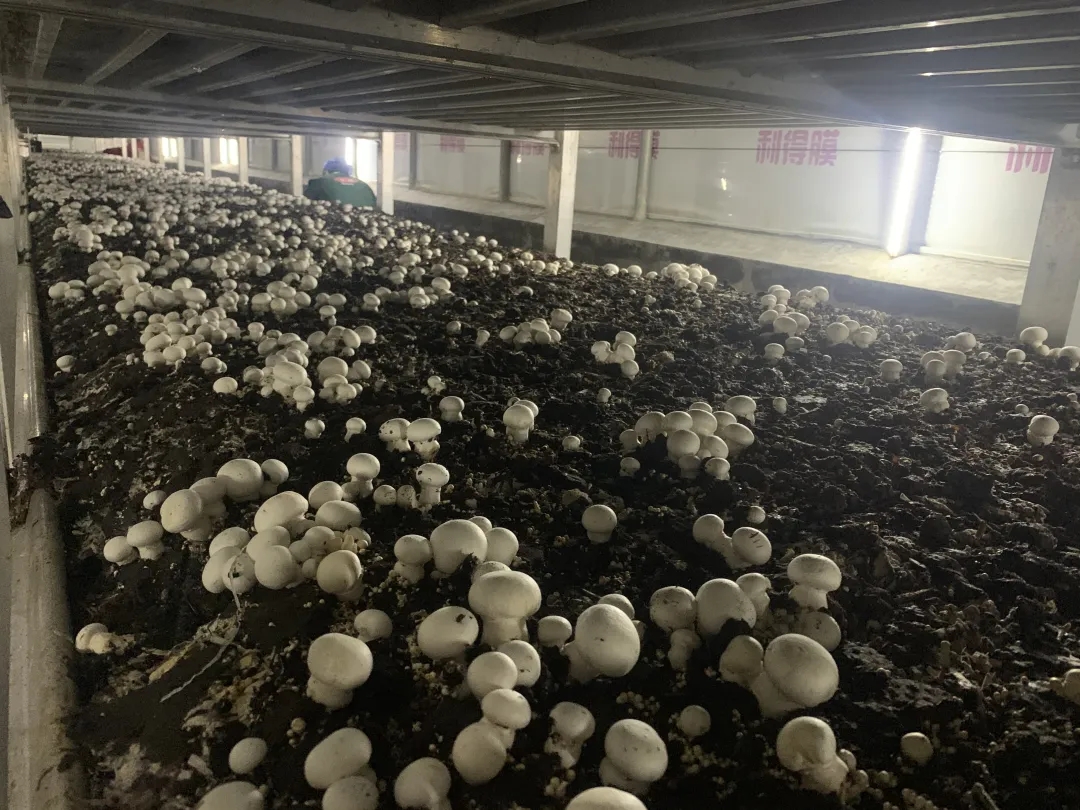
"Our mushrooms have a rich, savory flavor and meet organic standards. You can eat them raw right after harvesting and even taste a hint of sweetness," says Wang Chunbao, Chief Engineer of Taizhou Wonong Technology Co., Ltd., as he pops a pristine white mushroom directly into his mouth.
Unlike common mushrooms on the market, Wonong Technology's mushrooms are strictly controlled from the source. The cultivation substrate is made from chicken manure, wheat straw, gypsum powder, soybean meal, and other ingredients, processed through two rounds of fermentation and sterilization. The air purification level in the growing rooms is second only to that of an operating room, and the irrigation water is also purified.
"We operate strictly according to organic growing standards. We raise the pH of the substrate to inhibit pathogens, using no pesticides throughout the process," Wang says.
If the "mushroom room" uses technology to grow "organic freshness," then the high-altitude vegetables from Shiliang Town, Tiantai County, have become popular in the market thanks to their unique geographical environment.
Wang Zhongxing, a staff member at the Shiliang Town Agricultural Comprehensive Service Center, explains that Tiantai County grows over 667 hectares (10,000 mu) of high-altitude vegetables, with Shiliang Town alone accounting for more than 400 hectares (6,000 mu).
"High altitude, low temperatures, large temperature differences between day and night — combined with the promotion of plastic mulch technology — have enabled zero-pesticide vegetable cultivation. Open-field planting, one crop per year, and the use of organic fertilizers — our vegetables are naturally high in quality," Wang says. Eggplants have thin skins and a soft, glutinous texture; cucumbers are crisp and refreshing with a hint of sweetness; peppers are thin, crisp, and aromatic; corn is sweet and crunchy… High quality brings high returns. Although they only grow one crop per year, the output value exceeds 150,000 yuan per hectare (10,000 yuan per mu) — far surpassing ordinary greenhouse or open-field cultivation.
A large-scale grower surnamed Wu notes that the temperature difference brought by altitude translates into tangible benefits. He started with just a few plots of land and has now expanded to more than 1.3 hectares (20 mu), with an increasingly diverse range of varieties. "Every summer, when high-quality vegetables are scarce in other places, that's exactly the right time for our Tiantai high-altitude vegetables to hit the market. Buyers from Ningbo and other counties/cities in Taizhou come to us directly."
The key to high vegetable quality is even more about the speed of "freshness" — harvested from the fields in the morning and arriving at the dining table the same day.
"Ordinary mushrooms often pass through multiple layers of wholesalers and take up to five days to reach consumers. But we are rooted in Taizhou. Mushrooms harvested the same day can be delivered to the table that very day, locking in the maximum amount of freshness," Wang Chunbao says.
Highly Distinctive Taizhou Seafood
In addition to high-quality vegetables, Taizhou seafood stands out in the national seafood market.
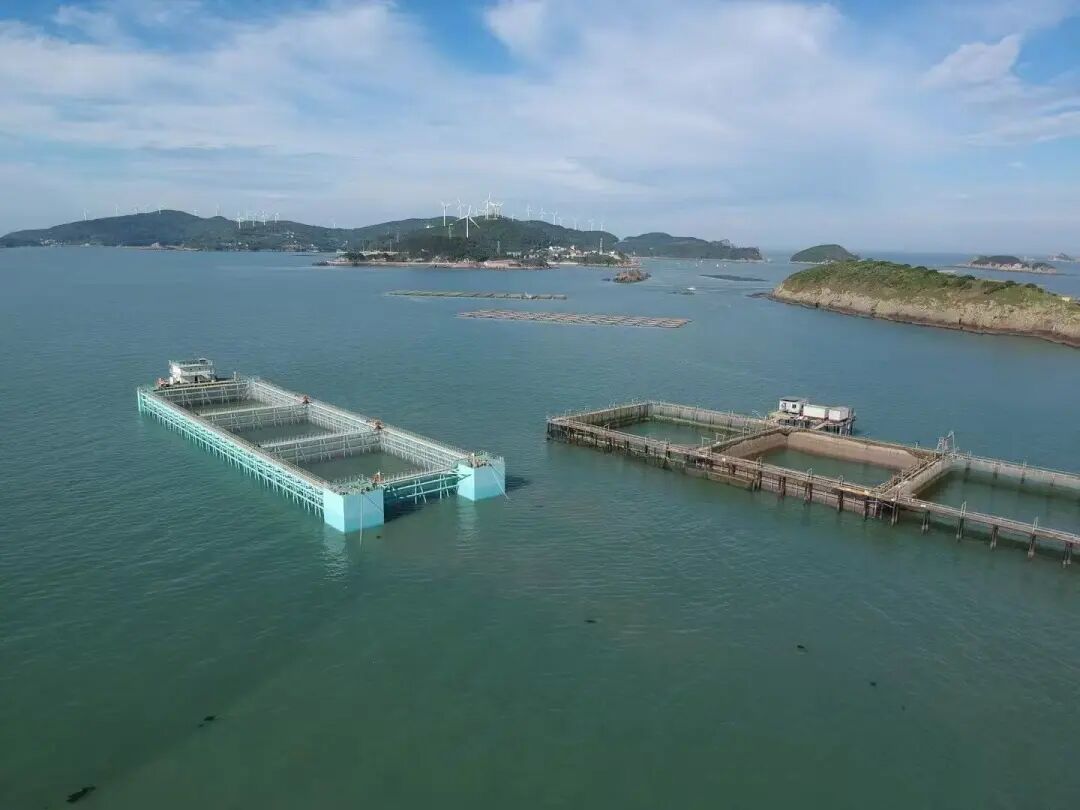
"Fujian and Wenzhou both have yellow croaker farming bases, but Dachen yellow croaker is highly distinctive. The most notable difference is its garlic-clove-shaped flesh, which is very close to that of wild yellow croaker," says Zhou Junhui, General Manager of Taizhou Guangsheng Fishery Co., Ltd. The sea area around Dachen Island is Class I seawater quality, with salinity 3°C to 5°C higher than Fujian's waters, an average water temperature 2°C to 3°C lower, and stronger currents.
In addition, the company's yellow croaker farming cages are each 1,600 square meters in area and 15 meters deep, giving the fish ample space to swim. When ocean currents come, they swim against them, resulting in firmer, more textured meat. "Yellow croaker raised in this environment have firm, garlic-clove-shaped flesh that is tender and fresh — very close in quality to wild yellow croaker."
In Sanmen, green crabs have earned a reputation for "crisp shells and tender, fresh meat" through improved farming techniques.
Zhang Lei, a representative of Taizhou Lianhang Aquatic Products, explains that Sanmen's water quality is naturally excellent, with abundant microbial communities. The green crabs raised here have long enjoyed a certain level of recognition and reputation in the market.
On this foundation, he has further upgraded Sanmen green crab farming: establishing standardized farming bases, shifting from polyculture to monoculture, and adopting self-bred seedlings, microbial preparations to regulate water quality, and live shellfish as feed.
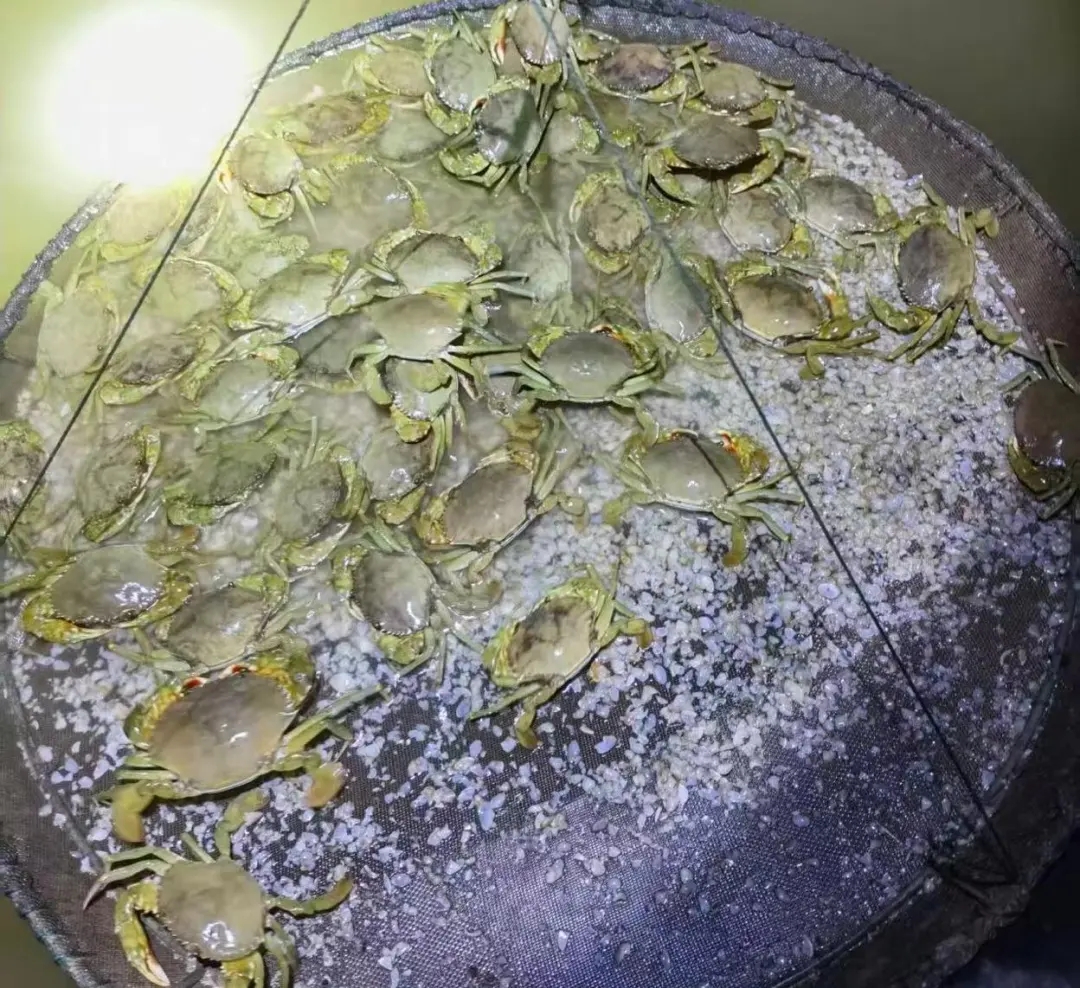
Taizhou Lianhang Aquatic Products' self-bred green crab seedlings
"Monoculture allows for more precise management and better quality control," Zhang says. The green crabs raised this way have thinner, crisper shells, more tender and flavorful meat, and brighter red roe.
From mushrooms grown in purified-air rooms, to vegetables grown at high altitudes, to yellow croaker raised in deep-water cages and standardized green crab farming — Taizhou is using scientific cultivation, ecological aquaculture, and efficient distribution to guard the word "fresh" all the way from the fields to the dining table.
These high-quality local ingredients are quietly becoming the solid foundation for Michelin-level gourmet dining!
Translator:Jiayang Lin