
From "One-Month Freshness" to "Year-Round Sweetness": The Path to Shared Prosperity Through Xiaochou Loquats
To thoroughly implement the provincial party committee and provincial government's decision on leveraging the "Thousand Village Demonstration, Ten Thousand Village Renovation" project to drive urban-rural integration, narrow the "three gaps," and advance pilot programs for common prosperity, market regulatory systems across Zhejiang have anchored their efforts in their functional roles. Focusing on rural food safety governance and bottlenecks in industrial development, they have systematically integrated policy resources from relevant departments and deeply promoted the construction of "Food Safety & Common Prosperity Happy Villages," giving rise to many vivid cases of assisting farmers in increasing income and achieving prosperity.
The "Zhejiang Market Regulation" official account will successively release experiences and practices from various regions. This is the 7th installment: From "One-Month Freshness" to "Year-Round Sweetness": The Path to Shared Prosperity Through Xiaochou Loquats.
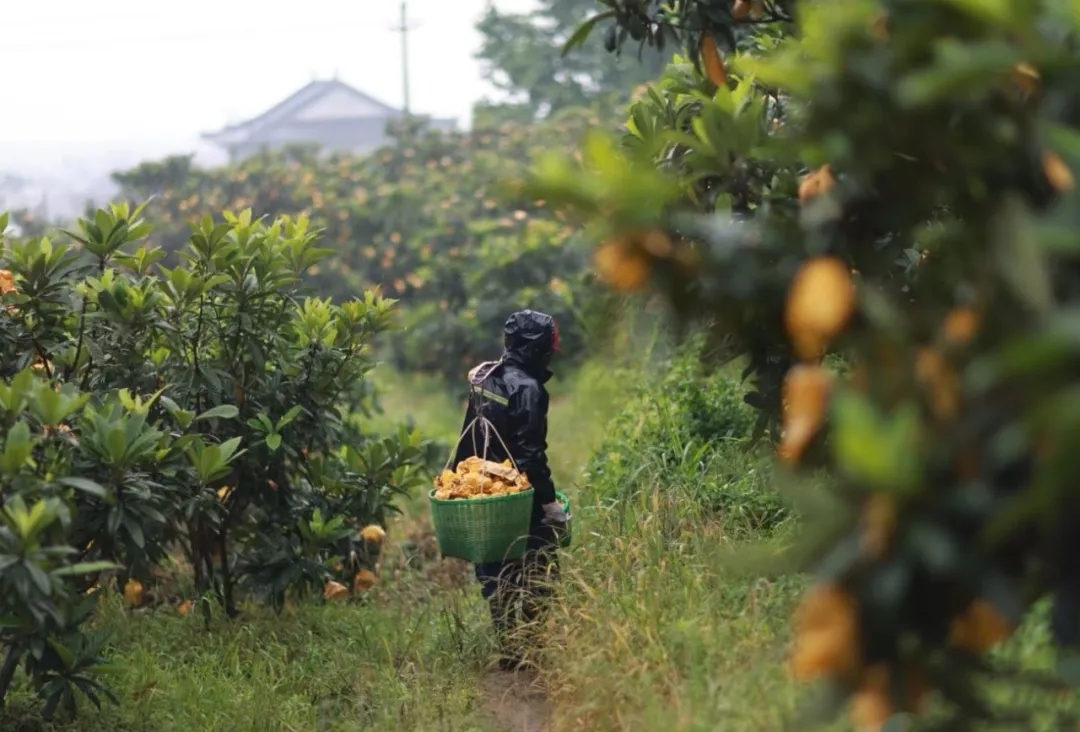
"Loquats are delicious, but the trees are hard to grow; loquats are delicious, but money is hard to make." Two decades ago, this sigh lingered over Xiaochou Village, Tongyu Subdistrict, Luqiao, Taizhou. The hillsides were heavy with "golden fruits" bending branches low, yet the villagers' brows remained furrowed: small fruits, poor appearance, ripe ones falling to the ground unsold—a month-long fresh fruit season could not sustain a year's hopes.
Change Began with a Group of "Daring to Try, Daring to Break Through"
Food Safety & Common Prosperity Happy Villages
In 2014, Ren Jianrong, hailed as the "Loquat King," took the lead in establishing Taizhou Luqiao Lvran Fruit Professional Cooperative. He united scattered farming households into a single force, unifying planting training, agricultural material procurement, and market connections, taking the first step toward large-scale cultivation of Xiaochou loquats. However, despite their reputation at the time, Xiaochou loquats were often at the mercy of nature: frost damage, fruit cracking, unstable quality—good fruits couldn't fetch good prices, and inferior ones rotted in the fields. Every harvest brought mixed feelings.
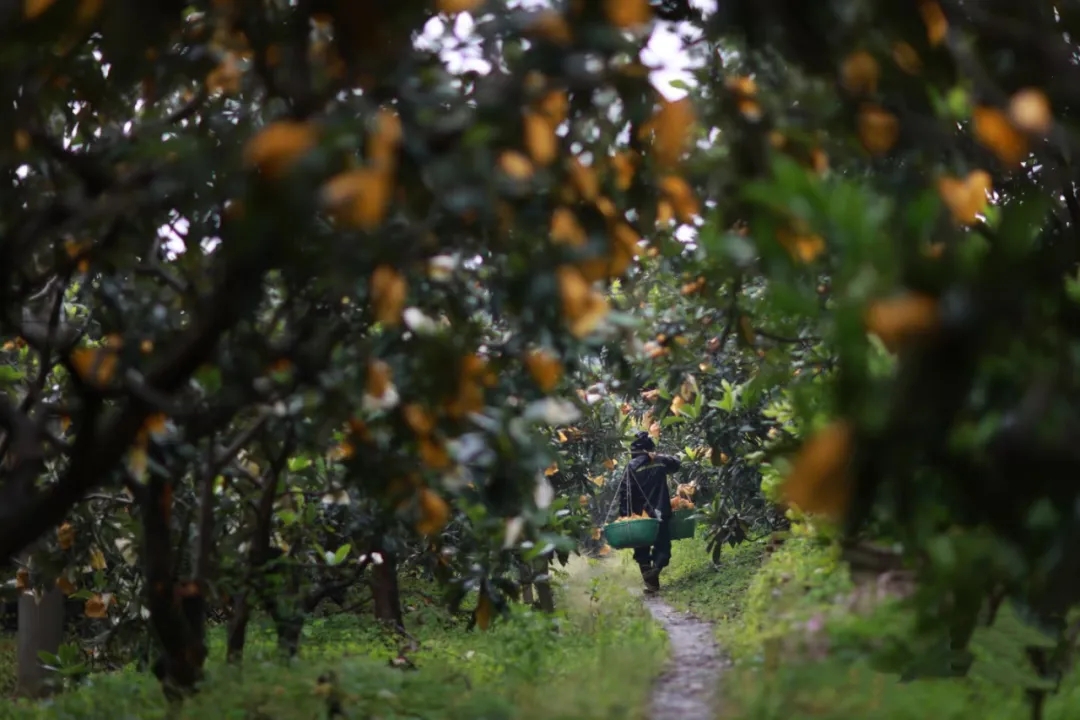
In 2016, Su Jian, a recently retired agricultural technical expert, was stationed in the village as the "First Secretary." Rolling up his trousers, he delved deep into the orchards, leveraging connections to introduce experts from the Zhejiang Academy of Agricultural Sciences. The "Loquat Academy" opened its courses, a "seed bank" was established, and initiatives such as soil improvement, superior variety selection, and dwarfing cultivation techniques took root—firmly bolstering the quality of Xiaochou loquats and the confidence of the fruit growers.
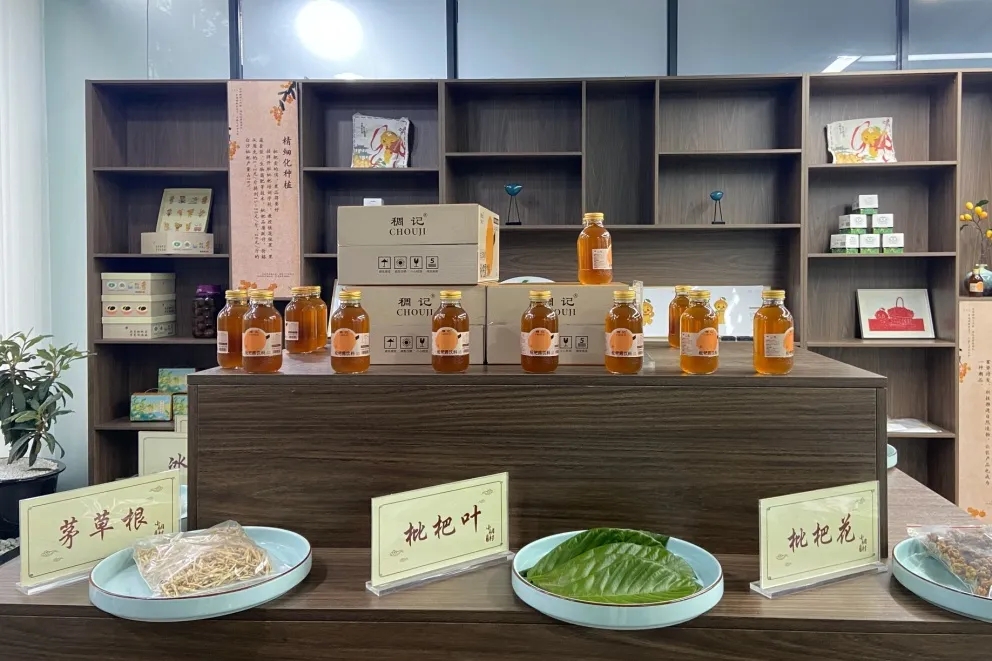
Though fresh loquats were much sought after, they were difficult to store and had a short sales period. Once the harvesting season ended, villagers were left idle, lacking sustained income. To break this deadlock, the village collective pinned hopes on deep processing of products. At this critical juncture, Ren Yueli, an inheritor of intangible cultural heritage, resolutely contributed her family's secret loquat syrup recipe. A blueprint for a "Common Prosperity Workshop" was thus unfurled, and a standardized "Sunshine Workshop" rose at the village entrance. The century-old sweet fragrance, once confined to small kitchen stoves, now drifted across vast markets via modern production lines.
Development Was Forged by a Group Meticulous to the Last Detail
Food Safety & Common Prosperity Happy Villages
When the rustic charm of traditional stoves met the ironclad rules of modern food safety, market regulation officials transformed into "new villagers," providing on-site guidance with unyielding rigor.
From the workshop's very construction, they were tenaciously engaged. Following the "General Hygienic Specification for Small Food Workshops" and the "5S" on-site management regulations, they scrutinized every detail—from raw material warehouses and changing rooms to production workshops and finished goods warehouses—even demanding that wall corner tiles be laid flush and seamless. To make the "sunshine" label truly authentic, high-definition cameras were installed in key areas for real-time production livestreaming, and external walls were replaced with fully transparent glass, allowing consumers to clearly see how loquat leaves were selected and syrup was simmered. Every step was made visible, transforming "eat with confidence" from a slogan into tangible reality.
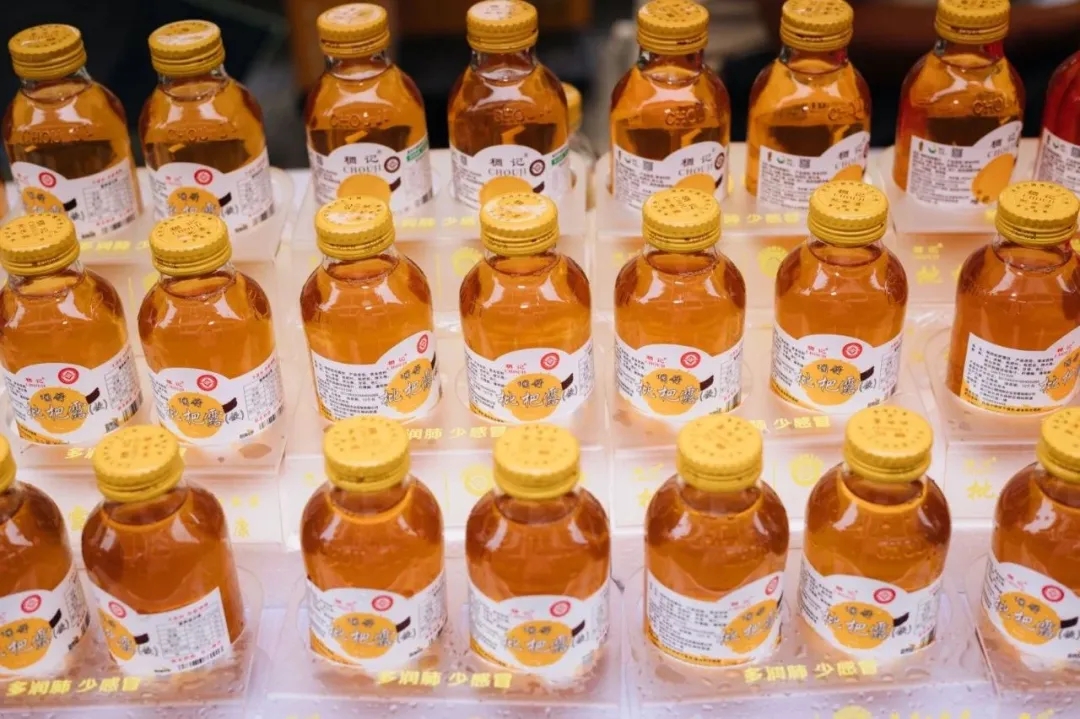
Ren Yueli's family-inherited loquat syrup technique is recognized as intangible cultural heritage at both the district and municipal levels. Yet the regulatory officials were uncompromising when reviewing the ancestral recipe:
Fritillaria is a traditional Chinese medicinal ingredient and cannot be added to food products!
Loquat leaves must not exceed 10 grams per day; dried loquat flowers at most 8 grams—strict weighing of inputs required!
Bottle labels must state: "Not suitable for infants, pregnant women, or lactating women"!
Initially, villagers were puzzled: "This recipe has been passed down for a hundred years—is such strictness really necessary?" It wasn't until a batch of loquat syrup faced a complaint over labeling issues that they tasted the bitter consequences of non-compliance. From then on, villagers no longer complained about the regulators' strictness; instead, they actively brought design drafts for review, even repeatedly confirming font sizes.
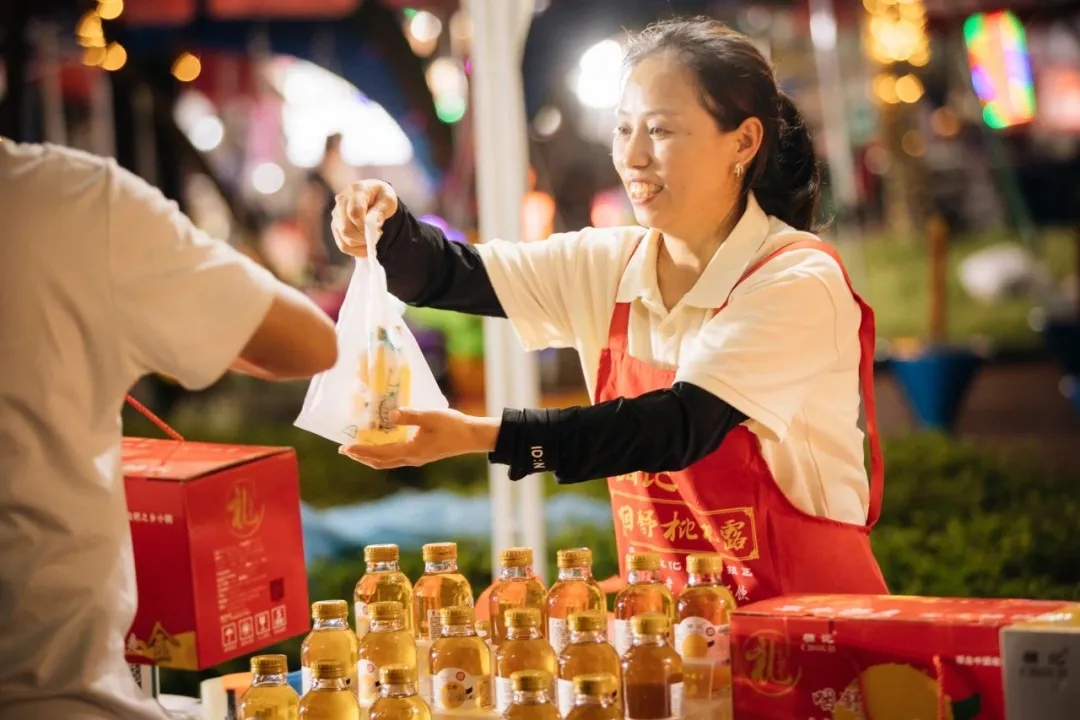
The time-honored craft was thus reborn amidst this "haggling over every ounce": traditional stoves gave way to standardized workshops; the orally transmitted "folk recipe" was rebranded as "Chou Ji," gained an electronic ID via the "Zhejiang Food Chain" system, and earned accolades such as "High-Quality Product" at the Zhejiang Agricultural Expo and "Zhejiang Specialty Souvenir." The villagers finally understood: these stringent rules were not binding ropes but rather ladders lifting their ancestral craft toward distant horizons.
Common Prosperity Thrives with a Group "Walking Hand in Hand"
Food Safety & Common Prosperity Happy Villages
Fighting alone cannot spark a prairie fire, but clenched fists can roll a snowball into a giant. With "Luqiao Loquats" as their banner, Xiaochou Village joined forces with Shangshantong, Liangxi, Dongming, and Xiazhuang Luxin Villages to form a "five-village contiguous zone," allowing the sweetness of one loquat to perfume an entire region.
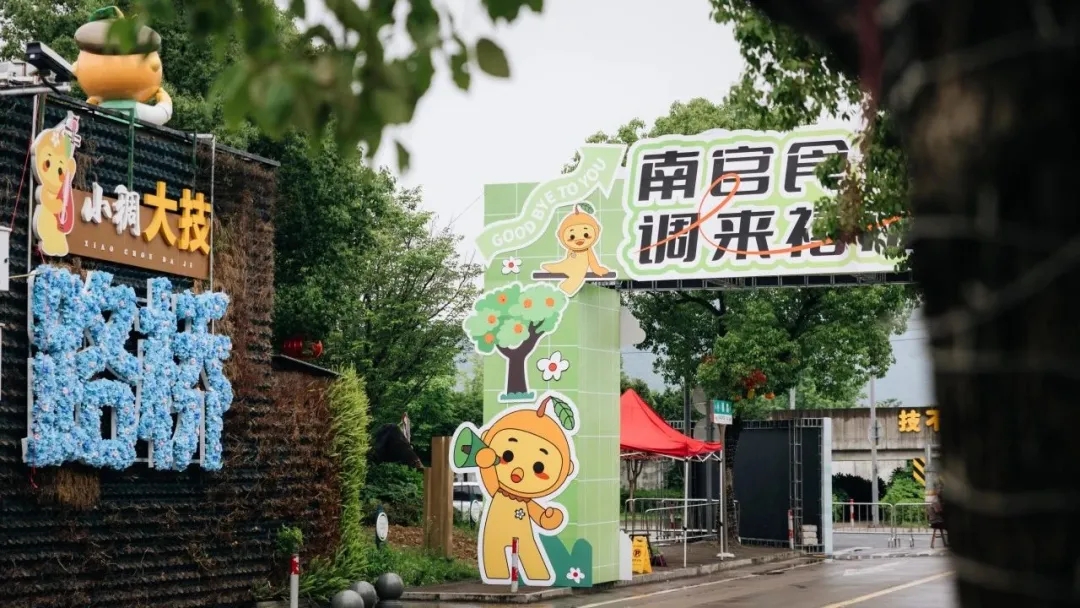
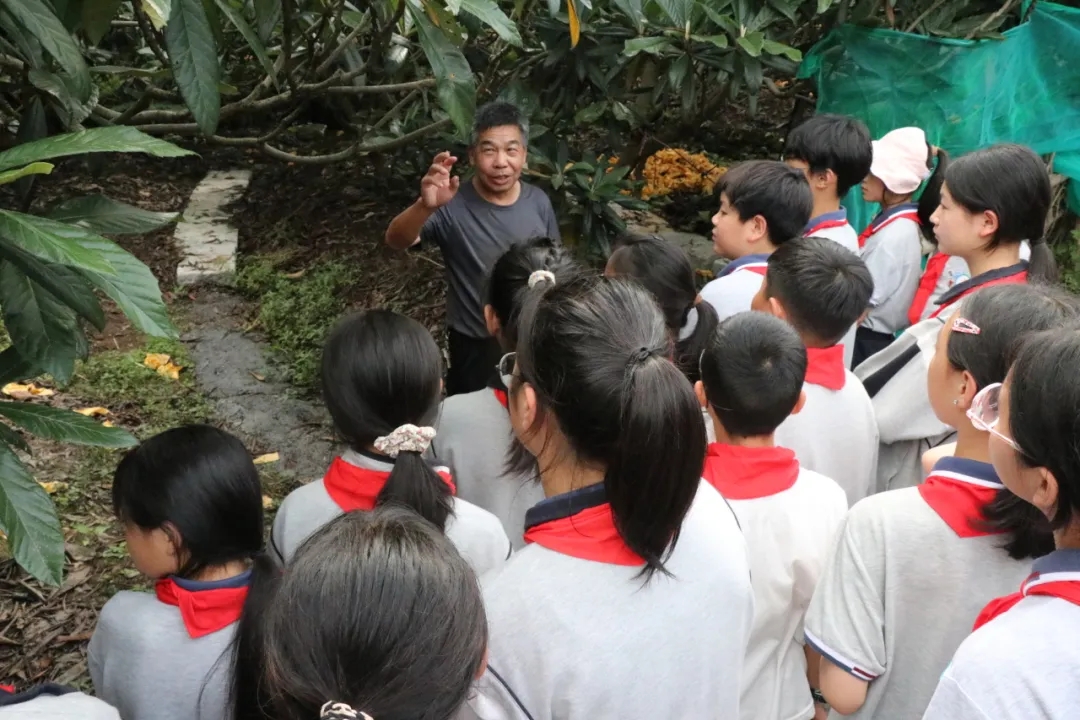
The villagers explored a five-village shareholding model, raising millions to establish a joint-stock company and register the "Chou Ji" trademark. Deep-processed products such as loquat paste and loquat beverages were successively developed, and new production lines boosted daily capacity to 30,000 bottles. The adorable mascot "Pipi" became the loquat's ambassador, inviting children on study tours to witness the reassuring journey "from branch to tongue."
Sales strategies also diversified through collective brainstorming. Partnering with e-commerce teams, they created the "Yu Ni Tong Xing" livestreaming brand, bringing stories of Xiaochou's intangible heritage brewing techniques, Shangshantong's morning dew fresh fruits, and Liangxi's mountain valley ecology to audiences via live streams. Offline, leveraging the scale and price advantages of the "five-village joint supply," they secured supply channels with major wholesale and retail distributors like Xian Guoba Ba, ensuring stable year-round orders for both fresh fruits and deep-processed products. The annual Loquat Carnival, blending fruit-picking experiences, intangible cultural heritage displays, and food fairs, attracted over 10,000 visitors, driving sustained income growth for peripheral industries such as catering and homestays.
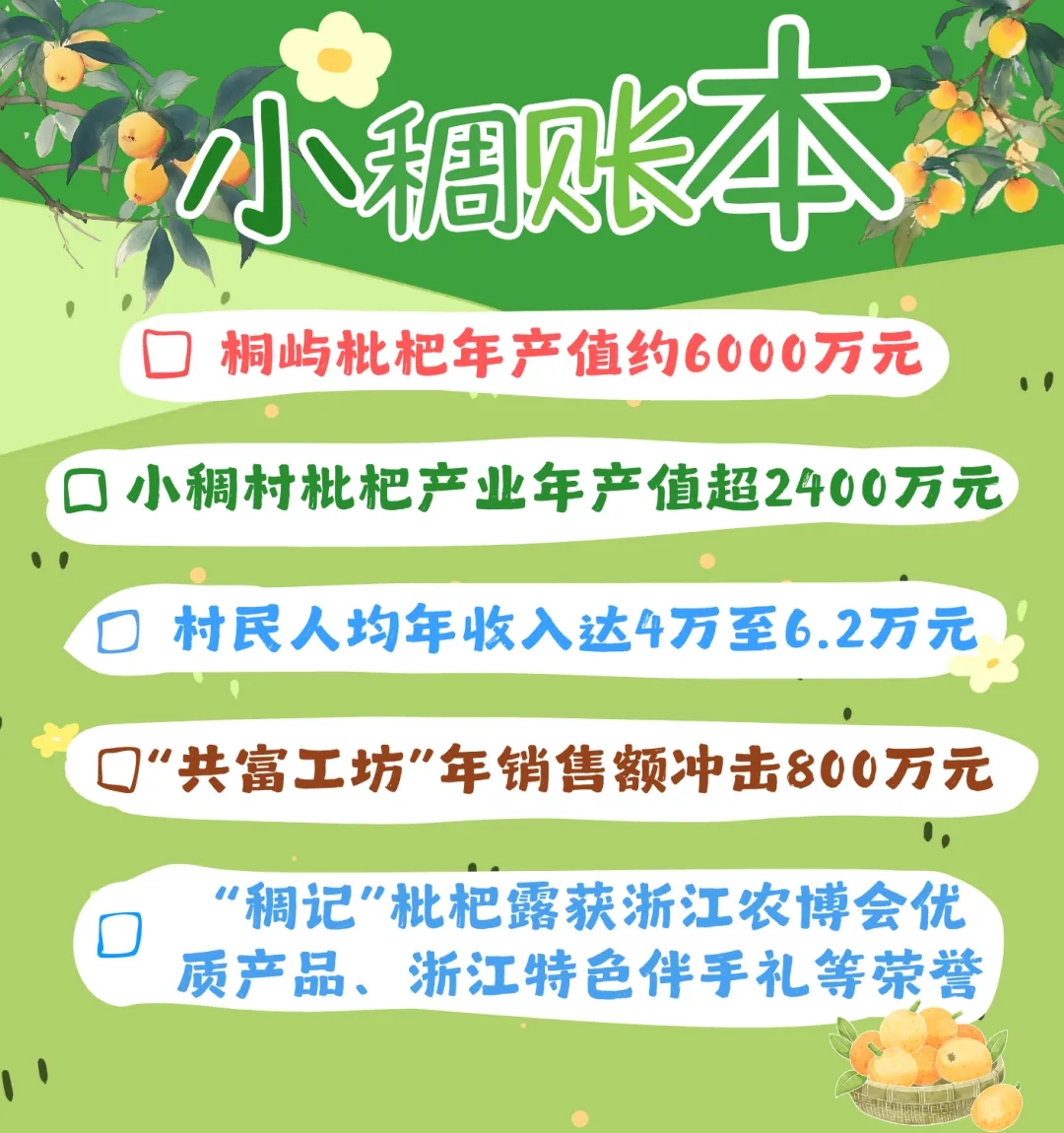
The wealth code of a single loquat was never about "monopolizing sweetness" but about "sharing fragrance." When loquat leaves from five villages simmer together in one cauldron, releasing their rich aroma, and when the "Chou Ji" signboard lights up in more cities, the happiness of this land—like its perennial loquat harvest—grows solid, steady, and enduring.
Translator:Jiayang Lin