
Taizhou: Why so delicious?
Why is Taizhou food so incredibly delicious?
It's blessed by geography, where ingredients abound from mountains to sea. Nestled amidst mountains on three sides within fertile basin plains, Taizhou is where the essence of land and ocean converges. Savoring mountain treasures and seeking oceanic flavors, the taste of Taizhou is the epitome of freshness and delight.
01 The Delights of Mountain Treasures
Taizhou's mountains stretch continuously, holding profound richness within. Here, you'll find a vast variety of vegetables, river delicacies whose freshness rivals seafood, and poultry and livestock that linger in memory.
Speaking of mountain treasures, let's start with crisp vegetables and fruits.
"Huangyan's honey tangerines are red and vibrant; Diantou water chestnuts with three spring onions" – this is a local Huangyan rhyme praising the millennium-old Diantou water chestnuts.
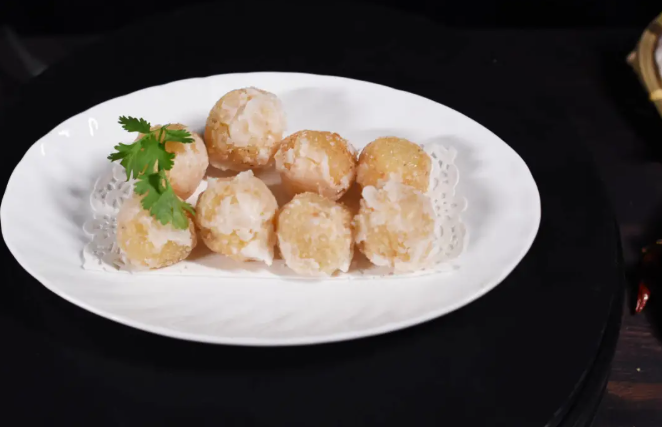
Now is the season for water chestnuts. Cook Diantou water chestnuts, peel and mash them into a paste, add a small amount of starch to make water chestnut balls, fry them, and add sugar to create "Horse Hooves Treading Frost." They clear heat, detoxify, stimulate appetite, aid digestion, promote salivation, and moisturize dryness. Importantly, they are fresh, sweet, and delicious.
Besides water chestnuts, Huangyan has another supremely fresh vegetable from the fields: water bamboo shoots produced in the Toutuo area. Thanks to excellent water quality and being green and pollution-free, Toutuo water bamboo shoots are renowned far and wide, recognized as a nationally registered geographical indication agricultural product in the second batch of 2020.
Top-quality water bamboo shoots require no complex cooking; steaming is the best choice.
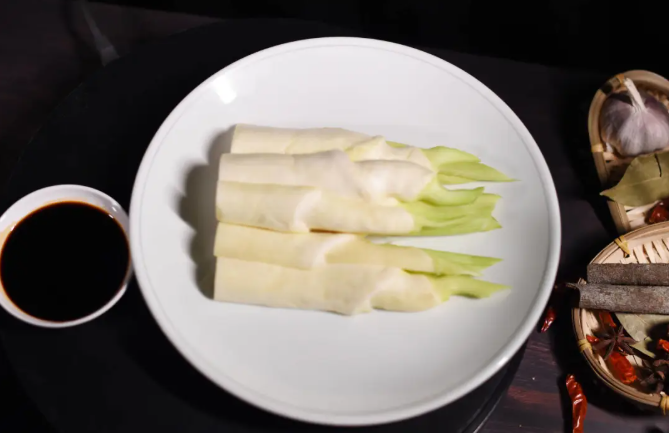
When small water bamboo shoots are steamed, dipped in soy sauce or meat broth, and paired with a bowl of fragrant rice, the combination of water bamboo shoots and the aroma of rice allows diners to feel the breath of the mountains.
Good mountains mean good water, and good water brings good things.
Yongxi Township in eastern Tiantai was the first stop of Xu Xiake's initial visit to Tiantai Mountain.
Yongxi has three fragrances: "fragrant rice, fragrant fish, and fragrant tea." Yongxi fragrant fish is known as the "King of Freshwater Fish." Extremely sensitive to water quality, Yongxi Township, which has maintained its pristine ecology for millennia, remains the sole producer of fragrant fish.
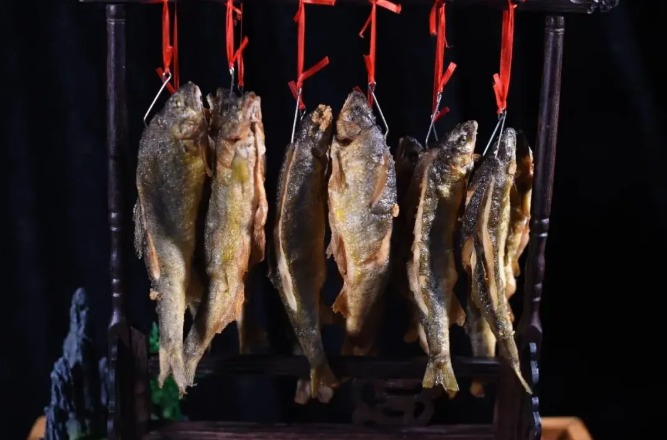
Pan-frying or grilling is the best method for preparing fragrant fish. How fragrant is pan-fried fragrant fish? "One household grills fragrant fish, the whole village smells it for miles."
If you love chicken, you must have heard of the "Sanhuang Chicken."
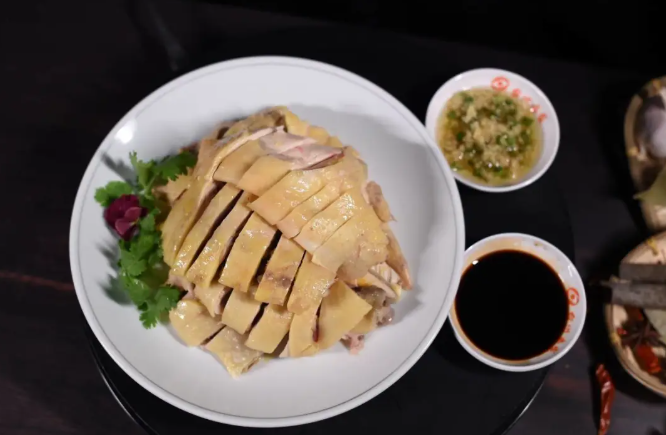
Sanhuang Chicken, named for its three yellows (yellow feathers, yellow feet, yellow beak), originates from Xianju. Raised year-round in mountain forests, they stroll leisurely, feeding on tender grass and insects, resulting in a light physique, tender meat, and moderate fat.
"Colorful Sauce Sanhuang Chicken" cleverly combines two famous Xianju products: Sanhuang Chicken and Xianju Biqing tea. Fragrant Xianju Biqing tea leaves are poured into the pot and cooked with Sanhuang Chicken pieces. The resulting chicken is tender, delicious, and infused with a hint of tea aroma.
For the cold platter, chicken pieces are sliced. A layer of transparent gelatin forms between the skin and meat, complemented by the unique clear color of Sanhuang Chicken, making mouths water. Served with four-colored dipping sauces—green scallion sauce, red spicy sweet sauce, garlic yellow sauce, and purple-red soy sauce—it offers a complete feast for the senses.
Honey tangerines from "Orange Country" Huangyan can also be cooked with meat, creating another layer of flavor.
Small hollowed-out tangerine bowls hold juicy spare ribs. This is the famous Huangyan dish "Orange-Flavored Spare Ribs."
The green-yellow tangerine peel contrasts with the soy-braised spare ribs, making diners' mouths water. Taking a bite, the spare ribs are infused with the sweetness of honey tangerines. The meat is lean but not dry, oily but not greasy, sweet and sour, exuding a light fragrance.
There's another dish called "Twin Treasures of Mountain and Sea," a bowl that gathers both land and ocean delicacies. Its other name is "Sea Anemone with Bean Noodles."
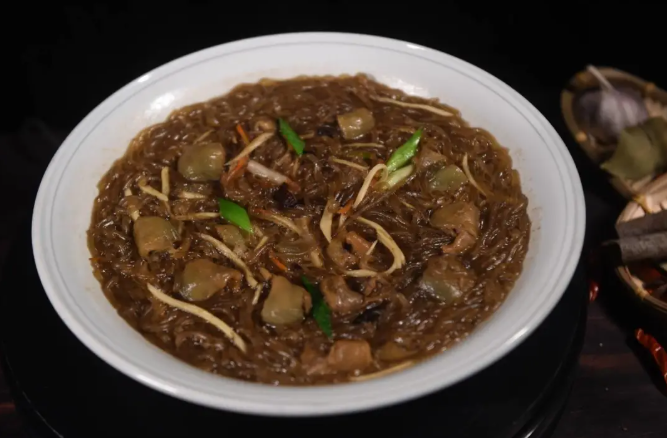
Sea anemone grow in coastal mudflats and shallow sandy seabeds. They are nutritious, rich in roe, and delicious. Taizhou produces plenty of sweet potatoes. Bean noodles are refined from sweet potato starch. Before sea anemone meet bean noodles, they are heated with lard, garlic sprouts, soy sauce, aged wine, and other ingredients, ultimately becoming a thick, fragrant bowl of Twin Treasures of Mountain and Sea.
Slurping it into the mouth, who wouldn't sigh with satisfaction?
02 The Freshness of Seafood
Seafood is what out-of-town visitors crave most in Taizhou. Taizhou's coastline offers different true tastes of the sea.
In winter and spring, the essence of East China Sea seafood lies in its "plumpness."
Oysters, commonly called sea oysters, are at their plumpest from Winter Solstice to Qingming the following year. Known as "milk of the sea," oysters are highly nutritious.
Fresh oyster meat can be prepared in many ways: steamed, freshly fried, stir-fried, scrambled with eggs, pan-fried in oyster pancakes, or used in soups. In Wenling, Taizhou, people love stir-frying oyster meat with garlic. Garlic removes the fishiness of oysters while locking in their original sweet freshness.
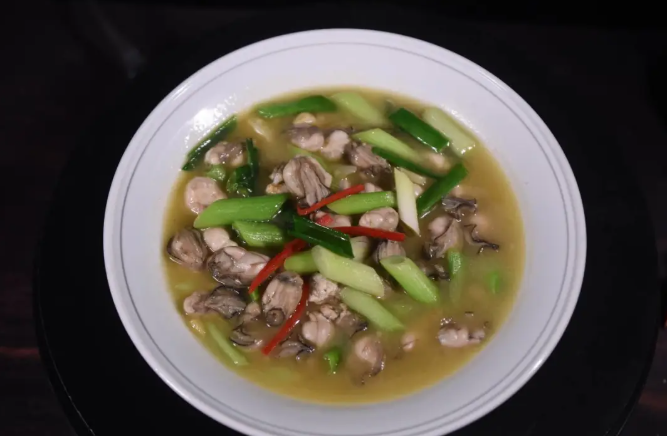
On winter nights, watching street food chefs blanch oyster meat in boiling water to remove mucus, heat a pan with a little oil, sauté minced garlic, ginger slices, and garlic root sections until fragrant. Once served, if you're slightly slow with your chopsticks, only the garlic leaves remain.
In Wenling, it's truly said, "Failing to see the cave heavens is to let down your eyes; failing to eat yellow croaker is to let down your stomach." Yellow croaker is a rare and excellent seafood ingredient, with tender, incredibly delicious meat.
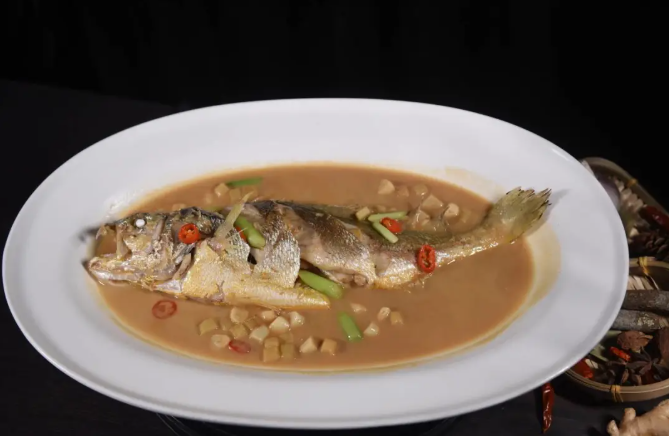
"Home-Style Braised Yellow Croaker" is, in the hearts of Taizhou people, the cooking method most worthy of yellow croaker. Without heavy oil or dark soy sauce, the golden broth is filled with the unique fresh aroma of yellow croaker. Gently picking up a piece with chopsticks, the white, tender flesh releases the rich fragrance of the fish. Dipped in the broth, the fresh taste that enters the mouth lingers wonderfully.
In cold weather, people also love another nourishing, oily-fragrant seafood – mudskipper.
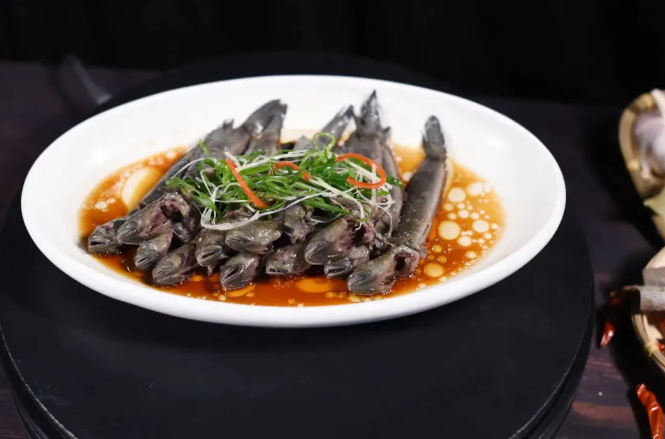
Mudskipper, formally named "Tan Hu" , also known as Tan Tu or Mudhopper, is produced in the mudflats of Taizhou Bay, mainly around Sanmen Bay.
Tan Hu is hailed as "ginseng in water" due to its tender meat, exceptionally high nutritional value, and medicinal properties.
"Scallion Oil Tan Hu" best brings out its original flavor.
Ribbonfish is the best representative of Taizhou winter seafood. As a purely wild marine fish, ribbonfish is high in protein and low in fat, with firm, incredibly delicious meat and only large bones. Even those afraid of fish bones can eat with confidence.
There are many ways to prepare ribbonfish, such as the Wenling specialty "Dried Ribbonfish," which uses sun-dried ribbonfish. Pan-fried ribbonfish involves frying fresh ribbonfish in oil until the skin is golden, yellow on the outside and white inside, tender within and crisp outside, excellent in color, aroma, taste, and form.
Another fish is similarly praised for having "few bones and plump meat."
Pomfret is the most seasonal seafood in Taizhou during late spring and early summer. In the East China Sea, pomfret can be caught year-round, but the best season is during spawning migrations in spring and summer. Pomfret has few bones and much meat. Home-style braised, scallion oil, or red-braised—all are equally delicious.
Entering autumn, crab is a must-eat. White crab, also called swimming crab, has the effects of nourishing yin, enriching blood, detoxifying, and healing injuries. Simply scoop a ladle of clean water, place scallions and ginger in the dish to enhance freshness, and steam over high heat for seven or eight minutes. The crab's fresh aroma will emerge. Steamed crab has bright color; beneath the shell, the golden crab roe is the soul of its deliciousness. When eating, the fresh, tasty roe juice spurts from the shell, leaving an endless aftertaste.
In Taizhou, when talking about seafood, Sanmen always comes up; in Sanmen, eating seafood inevitably leads to green crab. "What can accompany my husband's wine? Sugar-glazed green crab and Li River oysters." The deliciousness of green crab was already written into poetry by Qing Dynasty poet Bao Qian.
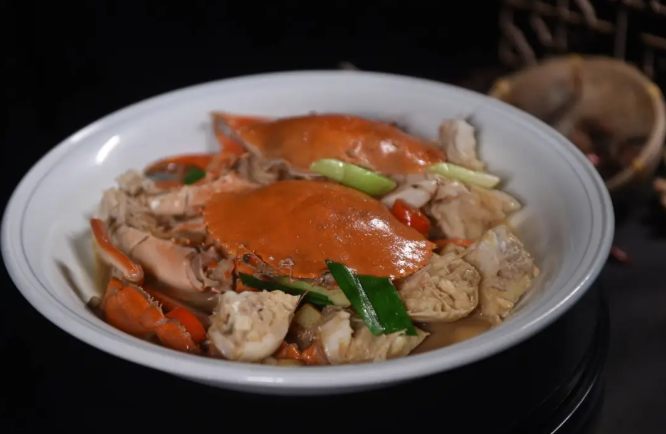
Steaming, red-braising, or stewing in soup are all possible. Cooking green crab with rice wine is not only suitable for autumn and winter but also evokes an old-fashioned taste of green crab.
If you don't like "chewing on hard stuff," you'll surely love this uniquely textured seafood.
Longtou Fish, also known as "Shui Chan" , has only one soft main bone, with tender, smooth, and delicious meat. Because it's "soft and boneless," people also call it "tofu fish."
Shui Chan is soft because its body contains a lot of water. After deboning, marinate Shui Chan with salt, MSG, rice wine, and pepper, coat with crispy batter, and deep-fry until golden and cooked.Fried crispy Shui Chan is round in shape, with tender fish meat and a crispy texture.
In coastal areas, there also inhabits a poetic local delicacy.
Whenever the tide arrives, they emerge from their burrows in the mudflats, waving their tentacles up and down with the waves as if dancing, yet leaving only a shadow. Hence, it has a poetic name: Wang Chao (Gazing at the Tide).
Wang Chao can be boiled or red-braised. Wang Chao is most delicious in spring and autumn.
But how to eat it varies by locality. Sanmen prefers red-braising; in Jiaojiang and elsewhere, boiling might be favored; in Yuhuan, the most popular is likely "Minglu Wang Chao".
If you want to try a variety of seafood at once, "Seafood Medley Soup" is most suitable. Generally made by simmering various small, flavor-complementary seafood with green vegetables into a soup, the blended tastes of multiple seafood create freshness upon freshness, fresh but not greasy, making it a popular nutritious soup.
Beyond grand seafood feasts, in Yuhuan, Taizhou, you can enjoy seafood snacks like fish cakes, fish chowder, fish skin wontons, and stir-filled mud snails.
03 The Chewiness of Snacks
The beauty of seafood is just one facet of Taizhou's cuisine. Taizhou's snacks are also a fond memory for many.
The sea gives Taizhou freshness but also brings dampness. Taizhou people's winters gain an extra layer of love because of ginger. Ginger in Taizhou exists like a gentle, nourishing presence. "Ginger Juice Mixed Egg" is the pinnacle of Taizhou's ginger-based snacks.
Entering a Ginger Juice Mixed Egg shop in winter, enamel bowls sit on the stove. In the bowls, half ginger juice, half egg mixture. The key to the mixed egg is the ginger juice, physically pressed with no additives. After heating, the two fuse and solidify. A spoonful of brown sugar is added—no other secrets.
Yet such simple ingredients become as wonderful as a priceless treasure. One sip into the stomach, forever remembered.
Taizhou snacks reveal grandeur in small things. "Egg White Lamb's Tail" is a prime example. The ingredient is merely egg white, but through precise oil temperature control and the chef's vigorous "whipping egg white" skill, this supremely clear and mild ingredient is cooked into a nationally famous Taizhou snack.
The fried egg white resembles a lamb's tail, hence the name. The finished product is round and cute. Taking a bite, the red bean paste flows like lava, filling the mouth, hot and piping. The egg white, fried in hot oil, is soft with a slight chewiness. Though a fried snack, it is truly oily but not greasy.
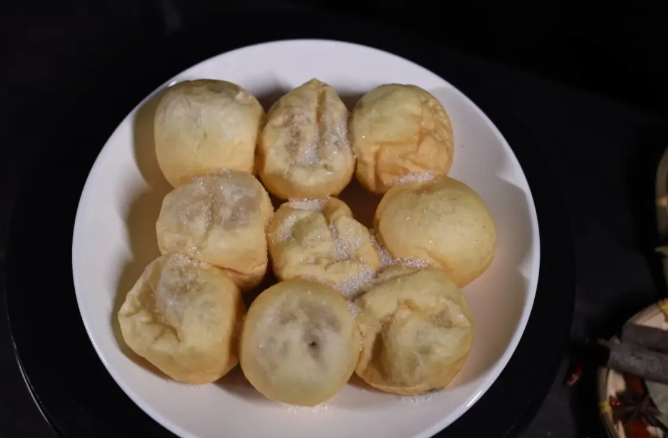
"Black Rice Cake" is a literary and gentle sweet. Made by steeping glutinous rice with black rice berries and firewood leaves to create black rice cake, paired with brown sugar and pine pollen, it has a unique flavor.
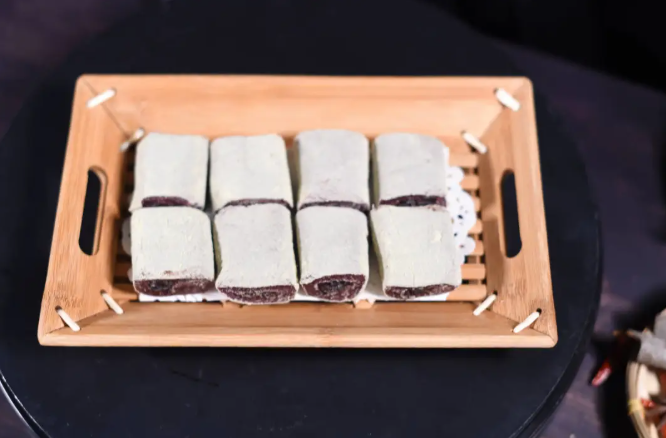
Wenling has a famous snack passed down through generations, made from pork small intestines. Small intestine rolls are made by winding pork small intestines into sausage shapes and then marinating them. They taste slightly bitter with the sweetness of the marinade. Rolling the small intestines requires skill: too tight makes them stiff; too loose makes them hard to shape. Well-made small intestine rolls have a chewy texture. Each wrapped intestine is thoroughly cooked and flavorful, with marinade fragrance on the outside and freshness inside—authentic Taizhou taste.
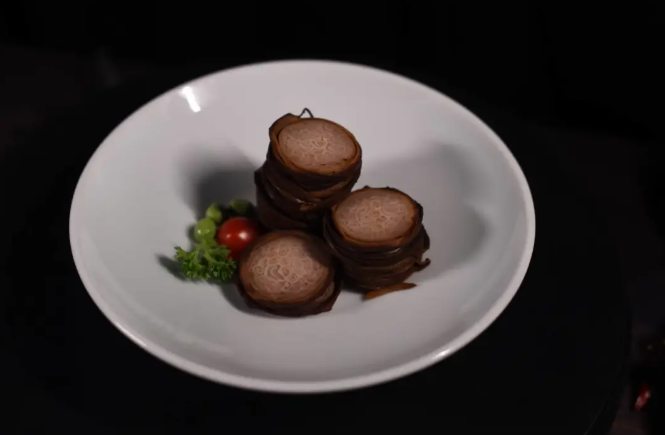
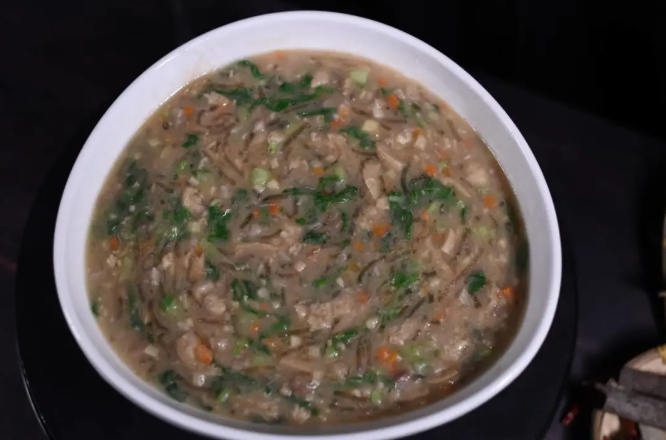
"Bean sprouts and side dishes fill the courtyard; sounds of ten thousand knives enter the ears slowly. Five flavors cooked in golden cauldrons boil; only shrimp and clams are needed, not fish." This is a scene of making "Zao Geng" described by Linhai poet Chen Yanlie of the Qing Dynasty in "Tuning Zao Geng on the Fourteenth Night." For the prefectural city Linhai, Zao Geng is not just a characteristic snack but a cultural accumulation, a steaming hot reunion feast for the Lantern Festival.
Taizhou also has a famous "Baishuiyang Tofu" known far and wide.
Authentic Baishuiyang tofu is almost entirely handmade. Ingredients are chosen meticulously, using high-quality locally produced Linhai "June Beans." Selected beans are washed clean with water, soaked, ground into pulp with water at a certain ratio, boiled in a large pot, skimmed of surface foam. Then, a strainer quietly approaches the water surface: one scoop, one pull, one lift. After removing three layers of tofu skin, old brine is used to coagulate the pulp. Finally, it's poured into special gauze to drain, transferred to a wooden mold for further pressing, dewatering, and shaping.
The Baishuiyang tofu produced through this series of processes is not easily broken, optimally firm yet tender, softer and smoother than gypsum tofu, yet more resilient than soft tofu.
There are many ways to cook Baishuiyang tofu: pan-frying, deep-frying, stir-frying... However, the most authentic and suitable for this season is, of course, slow stewing in a small pot.
This pot of slowly stewed tofu left an unforgettable impression on the famous writer Zhu Ziqing, who lived in Linhai in 1921. He wrote affectionately in "Winter": "Speaking of winter, I suddenly think of tofu. The water boils, like many fish eyes, with small pieces of tofu nourished inside, tender and smooth, like white fox fur worn inside out..."
Millennia of cultural inheritance and innovation have formed Taizhou's unique food culture. Staple foods, side dishes, desserts, snacks, live seafood—almost any type you can think of, you can find on Taizhou's dining table.
Also awaiting you on Taizhou's table are "Pao Xia" ( fried stuffed dough), "Jiao Bing Tong" ( stuffed rolled pancakes), "Qian Gao" ( stuffed rice cakes), "Rou Mo Chui Fan" ( steamed rice with minced meat), "You Yu Chao Nian Gao" (stir-fried squid with rice cakes), "Chao Ma Ci" (stir-fried glutinous rice cakes), "Luo Bo Yuan" ( radish balls)...
If you have enough time, every part of Taizhou has thousands of dishes waiting for you to try.
Translator:Jiayang Lin